Begin with the smallest firm rule
Design briefs are often crowded with wishes. Puzzles teach a different starting point: find the one constraint that cannot move. For a chair it may be the height of a seated person; for a booking service, the moment a customer must confirm. Everything else goes on a second list, marked "assumed".

A documented Scandinavian contribution
If there is a design-thinking tradition the region can fairly claim, it is participatory design. In Norway in the early 1970s, Kristen Nygaard worked with the Iron and Metal Workers' Union on how computers would affect their jobs. In the UTOPIA project (1981–85), researchers including Pelle Ehn worked with Nordic graphic workers' unions to design newspaper layout tools alongside the people who would use them, using mock-ups and paper prototypes.
The puzzle parallel is direct: the users exposed assumptions the designers had not noticed. This is a specific, citable history — not proof of a general Nordic temperament, but a real thread in the field.
Where frameworks fit
Many teams now use the Double Diamond, published by the UK Design Council in 2005, or methods associated with Stanford's d.school. These alternate between widening and narrowing. Puzzle practice sharpens the narrowing phase: it trains you to see which constraints are real before you converge.
The four-step loop
Constraint
One sentence. The rule you will not break.
Assumptions
Everything treated as fixed that nobody fixed.
Prototype
Break one assumption; build in under an hour.
Reflection
What opened, what closed, what next.
A worked case
A small library wants to display more puzzle books without adding shelves. The fixed constraint: no new floor space.
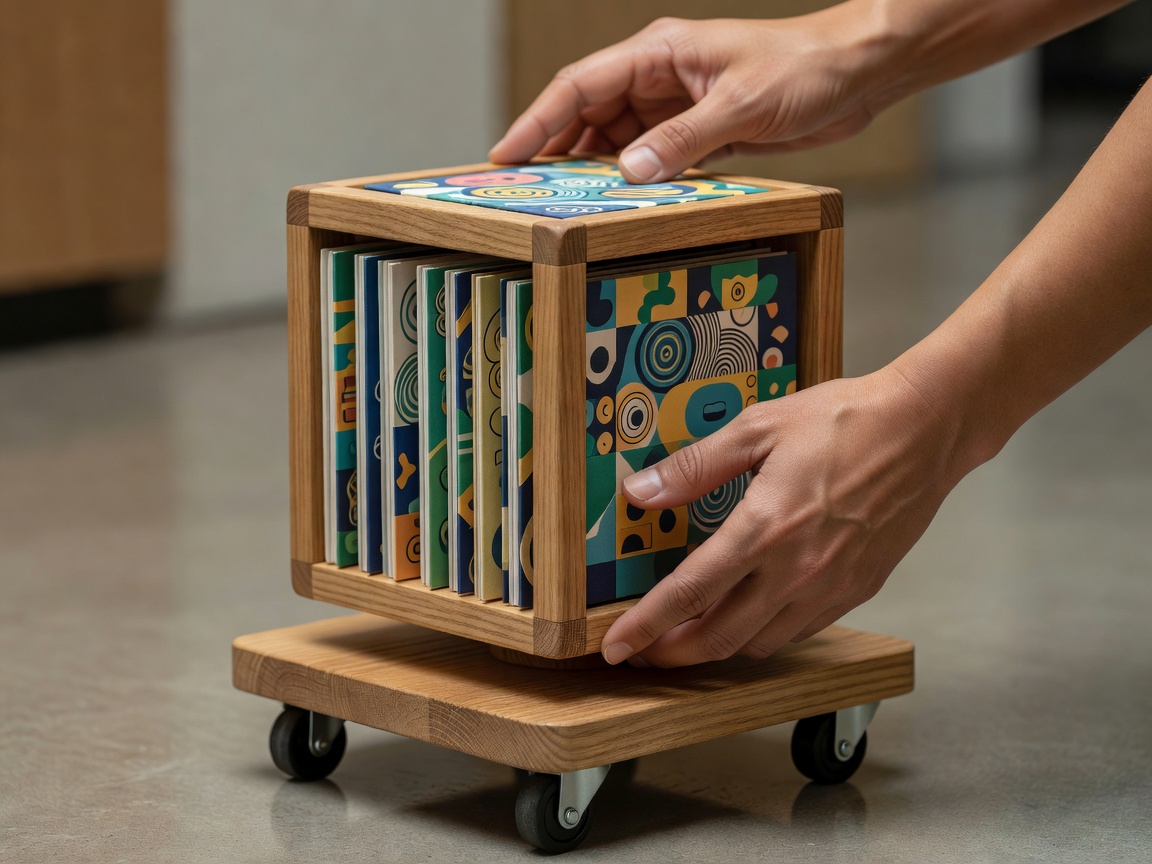
Assumptions listed: books stand spine-out; shelves are horizontal; displays stay put. Breaking the last one, the team taped paper mock-ups of a rotating cube display to a trolley that moves between reading tables each week.
The answer came from treating location as variable, not from more storage. The Soma lesson returns: the material stayed the same; the rule about where it lives changed.
Before and after

Keep the reflection honest
Not every broken assumption leads somewhere. Record the failures too: they show which constraints were genuinely load-bearing. Over time, the assumption list becomes a map of your own habits — the most useful puzzle you will solve.